

Artificial Intelligence (AI) is one of the most exciting technologies of our time. You may have already used AI without even realizing it. Every time you ask ChatGPT a question, use Google Search, get movie recommendations on Netflix, or unlock your phone with face recognition, AI is working behind the scenes.
If you are wondering what is artificial intelligence, this beginner-friendly guide will explain everything in simple English. You do not need a technical background to understand AI. By the end of this article, you will know what AI is, how it works, where it is used, and why it is becoming an important part of our daily lives.
What Is Artificial Intelligence?
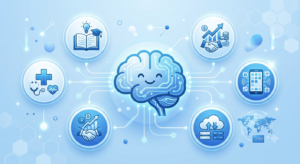
Artificial Intelligence is a technology that allows computers and machines to perform tasks that usually require human intelligence.
These tasks include:
- Learning from information
- Solving problems
- Understanding language
- Recognizing images
- Making decisions
- Answering questions
Instead of following only fixed instructions, AI systems can analyze data, recognize patterns, and improve their performance over time.
For example, when you type a question into ChatGPT, it understands your words and generates a useful response within seconds. This is an example of artificial intelligence in action.
In simple words, AI helps machines think, learn, and make smart decisions.
Why Is Artificial Intelligence Important?
Artificial intelligence is changing the way people work, study, communicate, and run businesses.
Many tasks that once took hours can now be completed in just a few minutes with AI tools.
For example:
- Students can summarize long notes.
- Writers can generate ideas faster.
- Businesses can answer customer questions automatically.
- Doctors can use AI to help detect diseases.
- Banks can identify suspicious transactions.
AI saves time, reduces manual work, and helps people make better decisions.
This is one of the main reasons why companies around the world are investing heavily in artificial intelligence.
A Simple Example of Artificial Intelligence
Imagine you shop online regularly.
After buying a pair of running shoes, the website starts recommending sports socks, fitness watches, and gym bags.
How does the website know what you might like?
It uses artificial intelligence.
AI studies your shopping history, compares it with millions of other customers, and predicts products you may want to buy.
This makes shopping easier for customers and helps businesses increase sales.
How Does Artificial Intelligence Work?
Many beginners think AI is magic.
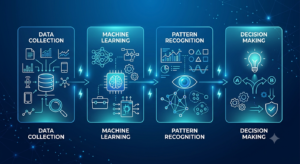
In reality, AI works by processing large amounts of data.
Here is a simple explanation:
1. Data Collection
AI needs information before it can learn anything.
This data can include:
- Images
- Videos
- Text
- Numbers
- Audio recordings
- Customer behavior
The more high-quality data AI receives, the better it becomes.
2. Learning from Data
After collecting information, AI looks for patterns.
For example:
If thousands of images are labeled “cat,” AI starts recognizing what cats look like.
Eventually, it can identify new cat pictures it has never seen before.
This learning process is called machine learning, which is one of the most popular branches of AI.
3. Making Predictions
Once AI learns from data, it can make predictions or suggestions.
Examples include:
- Recommending YouTube videos
- Predicting tomorrow’s weather
- Detecting spam emails
- Suggesting products on Amazon
- Translating languages
4. Improving Over Time
Many AI systems continue learning as they receive more data.
This helps them become smarter and more accurate.
For example, Google Search improves because millions of users interact with it every day.
The Main Types of Artificial Intelligence
Artificial intelligence is usually divided into different categories.
Understanding these types helps you know what AI can and cannot do.
1. Narrow AI
Narrow AI is designed to perform one specific task.
It cannot think like a human.
Examples include:
- ChatGPT
- Google Translate
- Siri
- Alexa
- Face Unlock
- Netflix Recommendations
Almost every AI tool people use today belongs to this category.
2. General AI
General AI is still a future concept.
This type of AI would perform almost every intellectual task that a human can do.
It could:
- Learn new skills
- Solve different kinds of problems
- Understand emotions
- Think creatively
Currently, no company has created true General AI.
Researchers are still working toward this goal.
3. Super AI
Super AI is a theoretical idea.
It refers to AI that becomes more intelligent than humans in every area.
Some experts believe this may happen in the future, while others think it may never become reality.
At present, Super AI does not exist.
Real-Life Examples of Artificial Intelligence
Many people believe AI only exists inside robots.
Actually, AI is already part of everyday life.
Here are some common examples.
ChatGPT
ChatGPT helps users:
- Write articles
- Answer questions
- Generate ideas
- Learn new topics
- Solve coding problems
Millions of people use ChatGPT every day.
Google Search
Google uses AI to understand what users are searching for.
Instead of matching exact words, it tries to understand the meaning behind your question.
This provides better search results.
YouTube Recommendations
When YouTube suggests videos you may enjoy, AI analyzes:
- Your watch history
- Your likes
- Videos you skip
- Topics you search for
The system becomes more accurate over time.
Netflix
Netflix recommends TV shows and movies based on your viewing habits.
This keeps users engaged and improves their experience.
Smartphones
Modern smartphones use AI for:
- Face recognition
- Camera improvements
- Voice assistants
- Battery optimization
- Spam call detection
Without AI, smartphones would not be as smart as they are today.
Benefits of Artificial Intelligence
Artificial intelligence offers many advantages for individuals and businesses.
Here are some of the biggest benefits.
Saves Time
AI completes repetitive tasks much faster than humans.
Instead of spending hours writing reports or analyzing data, AI can do much of the work in minutes.
Improves Accuracy
AI can reduce human errors when properly trained.
This is especially useful in healthcare, finance, and manufacturing.
Works 24/7
Unlike humans, AI systems do not get tired.
They can work day and night without breaks.
This is why many businesses use AI-powered customer support chatbots.
Increases Productivity
Employees can focus on important work while AI handles routine tasks.
This improves efficiency across many industries.
Helps People Learn Faster
Students and professionals use AI tools to:
- Understand difficult topics
- Summarize books
- Practice languages
- Solve math problems
- Improve writing skills
Learning becomes easier and faster with AI assistance.
Challenges and Limitations of Artificial Intelligence
Artificial intelligence has many benefits, but it is not perfect. Like every technology, AI also has some challenges. Understanding these limitations helps people use AI more responsibly.
AI Can Make Mistakes
AI learns from data. If the data is incorrect, outdated, or incomplete, the AI may produce wrong answers.
For example, an AI chatbot might misunderstand a question or provide information that is not fully accurate. This is why it is always a good idea to double-check important facts, especially in areas like health, law, or finance.
AI Does Not Think Like Humans
Many people believe AI can think exactly like a human. This is not true.
AI does not have emotions, personal experiences, or common sense. It predicts answers based on patterns in data instead of understanding the world the way people do.
For example, AI can write a story about friendship, but it does not actually experience friendship.
Privacy Concerns
Some AI systems collect user data to improve their performance.
If companies do not protect this information properly, user privacy may be at risk.
That is why many organizations follow strict privacy rules and encourage users to avoid sharing sensitive personal information with AI tools.
Job Changes
Artificial intelligence is changing many industries.
Some repetitive jobs are becoming automated, while new careers are being created in AI development, data analysis, cybersecurity, and digital marketing.
Instead of replacing every worker, AI is more likely to change how people work by handling repetitive tasks and allowing humans to focus on creative and strategic work.
AI Needs Human Supervision
AI should not make every important decision on its own.
Doctors, teachers, engineers, lawyers, and business leaders still need to review AI-generated information before making final decisions.
Human judgment remains essential.
How Artificial Intelligence Is Used in Different Industries
Artificial intelligence is no longer limited to technology companies. Today, it is helping almost every industry improve its services.
AI in Healthcare
Healthcare is one of the biggest areas where AI is making a difference.
Doctors use AI to:
- Analyze medical images
- Detect diseases earlier
- Support diagnosis
- Monitor patient health
- Speed up medical research
AI does not replace doctors. Instead, it helps them make faster and more informed decisions.
AI in Education
Students and teachers use AI every day.
AI helps with:
- Personalized learning
- Homework assistance
- Language translation
- Writing support
- Online tutoring
- Quiz generation
Learning becomes more interactive and accessible for students of all ages.
AI in Business
Businesses use AI to improve customer service and daily operations.
Common business applications include:
- Customer support chatbots
- Sales forecasting
- Data analysis
- Email automation
- Inventory management
- Marketing campaigns
AI helps businesses save time while improving customer satisfaction.
AI in Banking and Finance
Banks use artificial intelligence to improve security and customer experience.
AI can:
- Detect suspicious transactions
- Reduce fraud
- Approve loan applications faster
- Analyze financial risks
- Provide personalized banking services
Many mobile banking apps already use AI behind the scenes.
AI in Marketing
Digital marketers use AI to create better campaigns.
AI can help with:
- Keyword research
- Content ideas
- Email marketing
- Customer targeting
- Ad optimization
- Social media planning
This allows businesses to reach the right audience more effectively.
AI in E-commerce
Online stores rely heavily on artificial intelligence.
AI improves shopping by offering:
- Product recommendations
- Personalized offers
- Smart search results
- Inventory predictions
- Customer support
These features create a better shopping experience and help businesses increase sales.
Popular Artificial Intelligence Tools
Many AI tools are available today, each designed for different tasks.
Here are some of the most popular ones.
| Tool | Main Purpose |
|---|---|
| ChatGPT | Writing, learning, coding, brainstorming |
| Google Gemini | Research and productivity |
| Claude AI | Writing and document analysis |
| Canva AI | Graphic design and presentations |
| Microsoft Copilot | Productivity inside Microsoft apps |
| Grammarly | Writing improvement |
| Notion AI | Note-taking and content generation |
| Perplexity AI | AI-powered search and research |
Each tool has its own strengths, so users should choose the one that best fits their needs.
Artificial Intelligence in Everyday Life
You may not notice it, but AI is already part of your daily routine.
Examples include:
- Unlocking your phone with face recognition
- Asking a voice assistant for directions
- Watching recommended videos
- Receiving personalized shopping suggestions
- Filtering spam emails
- Using online maps for navigation
- Translating languages instantly
- Getting music recommendations
These small features save time and improve convenience.
Common Myths About Artificial Intelligence
Many misunderstandings exist about AI.
Let’s separate facts from fiction.
Myth 1: AI Will Replace Every Job
Reality:
AI will automate some repetitive tasks, but many jobs will continue to require human creativity, communication, leadership, and decision-making.
In many industries, AI works alongside people instead of replacing them.
Myth 2: AI Is Always Correct
Reality:
AI can make mistakes.
It depends on the quality of the data it learns from and the way it is used.
Human review is still important.
Myth 3: AI Is Only for Large Companies
Reality:
Today, students, freelancers, small businesses, and creators use AI every day.
Many AI tools even offer free plans for beginners.
Myth 4: AI Is Too Difficult to Learn
Reality:
Modern AI tools are designed to be simple.
Anyone with basic computer skills can learn to use them.
You do not need to be a programmer to benefit from AI.
Tips for Using Artificial Intelligence Wisely
Artificial intelligence is most helpful when used responsibly.
Here are some simple tips.
Learn the Basics
Understand what AI can and cannot do before relying on it for important tasks.
Verify Important Information
Always check facts when using AI for health, finance, legal matters, or academic work.
Protect Your Privacy
Avoid sharing passwords, financial information, or other sensitive personal data with AI tools.
Use AI as a Helper
AI should support your work, not replace your own thinking.
The best results come from combining AI with human creativity and judgment.
Keep Learning
AI technology changes quickly.
Reading guides, exploring new tools, and practicing regularly will help you stay updated.
The Future of Artificial Intelligence
Artificial intelligence is expected to become even more useful in the coming years.
Experts believe AI will continue improving in areas such as:
- Healthcare
- Education
- Transportation
- Customer service
- Scientific research
- Agriculture
- Manufacturing
- Software development
Future AI systems may become better at understanding language, solving complex problems, and helping people work more efficiently.
However, responsible development will remain important to ensure AI is used safely and ethically.
Frequently Asked Questions (FAQs)
1. What is artificial intelligence in simple words?
Artificial intelligence (AI) is a technology that allows computers to perform tasks that normally require human intelligence. These tasks include learning, solving problems, understanding language, and making decisions.
2. Where is artificial intelligence used?
AI is used in many industries, including healthcare, education, banking, online shopping, transportation, marketing, customer service, and entertainment. Many everyday apps and websites also use AI.
3. Is ChatGPT an artificial intelligence?
Yes. ChatGPT is an AI-powered chatbot that understands and generates human-like text. It can answer questions, write content, explain concepts, and assist with many daily tasks.
4. What are the main types of artificial intelligence?
The three commonly discussed types are:
- Narrow AI
- General AI
- Super AI
Today, almost all AI applications belong to the Narrow AI category.
5. Can artificial intelligence replace humans?
AI can automate repetitive tasks, but it cannot fully replace human creativity, emotions, critical thinking, and decision-making. It is best used as a tool that supports people rather than replacing them.
6. Is artificial intelligence difficult to learn?
No. Many AI tools are designed for beginners. You can start learning with simple tools like ChatGPT, Canva AI, or Google Gemini without any programming knowledge.
7. What are the benefits of artificial intelligence?
Some major benefits include:
- Saving time
- Improving productivity
- Reducing human errors
- Automating repetitive tasks
- Helping people learn faster
- Supporting better business decisions
8. Are there any risks of artificial intelligence?
Yes. AI can sometimes produce incorrect information, raise privacy concerns, or reflect bias if trained on poor-quality data. Responsible use and human oversight are important.
9. Can students use artificial intelligence?
Yes. Students can use AI to understand complex topics, summarize notes, improve writing, practice languages, and prepare for exams. However, they should use AI as a learning assistant rather than copying answers.
10. What is the future of artificial intelligence?
AI is expected to become more advanced and useful across many industries. It will likely improve healthcare, education, business, transportation, and scientific research while creating new opportunities and changing the way people work.

Final Thoughts
Artificial intelligence is transforming the way we live and work. It helps businesses improve efficiency, supports students in learning, assists professionals with daily tasks, and makes technology more accessible for everyone.
If you are just beginning your AI journey, start with basic concepts and explore beginner-friendly tools. Learning AI today can help you build valuable skills for the future and stay ahead in a rapidly changing digital world.
The key is to use AI responsibly, continue learning, and combine its capabilities with human creativity and critical thinking.