
.Have you ever walked down a British street, minding your own business. Wondered if you were accidentally committing a crime?
It sounds crazy. The UK is known for its polite citizens, structured queues, and orderly lifestyle. But hidden deep within centuries of legal history lie some incredibly weird UK laws that technically remain active today.
From how you handle your fish to what you do on a snowy afternoon, British legal history is packed with absolute madness. If you live in the UK, or if you are just visiting, chances are high that you broke at least one of these rules this week.
Let’s dive into the most bizarre, confusing, and outright hilarious laws that will make you look at the UK legal system in a whole new light.
1. The Great Salmon Suspicion
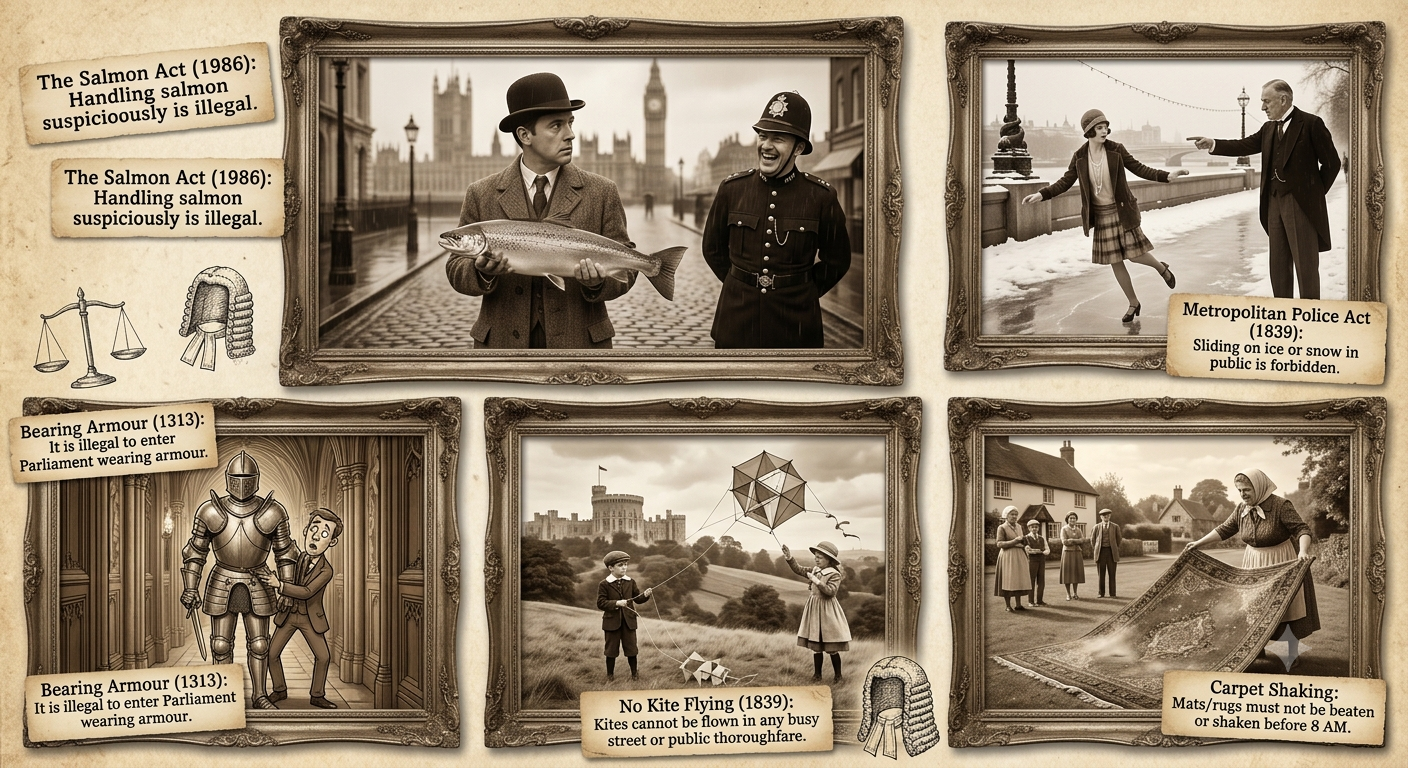
Let’s start with one of the most famous pieces of legislation that sounds like an absolute joke. Under the Salmon Act of 1986, it is an offence to handle a salmon under “suspicious circumstances.”
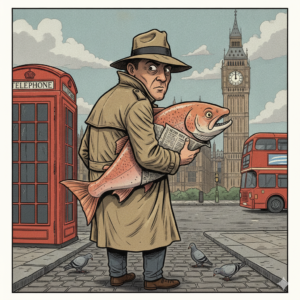
What does “suspicious” even mean for a fish? The law was actually written to stop illegal fishing and poaching. However, the wording is so vague that if you are caught holding a salmon looking a bit nervous, a police officer could technically question your life choices.
So, next time you buy fresh seafood from a local market, make sure you carry it with confidence.
2. No Sliding on the Ice, Please
Winter in the UK is magical. When the snow hits and the pavements freeze over, children and adults love to slide around. But if you do this on a public street, you are breaking the law.
The Metropolitan Police Act 1839 explicitly states that it is illegal to make or use any slide upon ice or snow in any street. Why? Because it causes danger to passengers.
This is one of those weird UK laws that was meant to keep Victorian streets safe, but today, it just makes everyone a criminal during a white Christmas. If you want to enjoy the winter weather safely, it is best to stick to dedicated parks.
You can check out the official guidance on UK Public Safety Regulations (External Link) to see how modern local councils manage winter pathways.
3. The Flying Kite Restriction
Speaking of the Metropolitan Police Act 1839, the Victorians really did not want people having fun outdoors. According to the exact same piece of legislation, it is illegal to fly a kite in a public street.
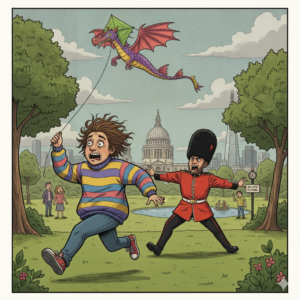
The law also bans playing games that annoy the inhabitants of the area. So, if you are kicking a football around a tight residential street or flying a kite near a main road, you are technically a rebel.
Thankfully, modern police officers have much bigger things to worry about than a kid with a colourful kite.
4. Carrying a Plank on the Pavement
Imagine you just bought some wood from a local DIY store and you are walking back to your flat. If you are walking on a London pavement while carrying a plank of wood, you are breaking one of the most specific rules in the country.
Unless you are loading or unloading a vehicle, transporting planks, casks, hoops, or ladders on a public footway is strictly forbidden. The goal was to prevent people from blocking busy pathways in crowded cities.
Today, it means your weekend DIY project might require a proper delivery truck instead of a quick walk.
For more interesting historical insights into how these rules shaped British towns, you can read our previous article on How Victorian Architecture Changed Cities (Internal Link).
5. Why You Cannot Wear Armor in Parliament
This is an old classic that goes back to the year 1313. Under the Statute Obtaining Forbidding Bearing of Armour, no member of Parliament is allowed to wear a full suit of armor inside the Houses of Parliament.
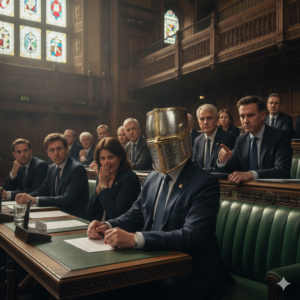
While no one is trying to squeeze into a metal suit before a political debate today, the rule remains on the books. It stands as a funny reminder of just how chaotic British history used to be.
6. Shaking Your Rug in the Morning
Keeping a clean house is important, but timing is everything in the UK. If you live in London, it is illegal to beat or shake any carpet, rug, or mat in the street.
There is one tiny exception: you are allowed to shake your doormat, but only before 8:00 AM.
If you get a sudden burst of cleaning energy at 2:00 PM and decide to smack your dusty rug against your front wall, you are breaking the law. The rule was created to stop clouds of soot and dust from ruining the clothes of wealthy people walking past.
7. Knock Down Ginger is Highly Illegal
We all remember the childhood game where you knock on someone’s front door and run away before they answer. In the UK, this game is often called “Knock Down Ginger.”
While homeowners find it incredibly annoying, most people assume it is just harmless, childish mischief. In reality, it violates a law from 1839 that bans wilfully and wantonly disturbing any inhabitant by pulling or ringing any door-bell.
Yes, that means playing this prank can technically get you into legal trouble. It is one of those weird UK laws that almost every single generation has broken at least once.
8. Asking for Change Could Count as Begging
Picture this: you are standing at a parking meter or a vending machine, and you are short of a 50p coin. You turn around and politely ask a passerby if they have any spare change to swap for a note.
Technically, under the Vagrancy Act 1824, this can be interpreted as begging. The law makes it an offence to place yourself in a public place to beg or gather alms.
While the law was intended to target aggressive begging, the strict wording covers almost anyone asking strangers for money in public. It is a fascinating look at how social laws from the 1800s still exist in a digital, cashless society.
To see how these old monetary rules apply to modern cash, check out our guide on the History of British Currency Forms (Internal Link).
9. The Absolute Right to the Whale
If you ever find a dead whale, sturgeon, or dolphin washed up on a UK beach, do not touch it. According to a royal decree from 1324 during the reign of King Edward II, these animals are classified as “Royal Fish.”
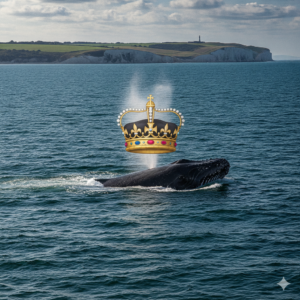
This means that any whale or sturgeon captured or washed ashore belongs automatically to the reigning Monarch. If you try to claim it for yourself, you are violating royal property rights.
Even today, if a beach washes up a large sea mammal, the government must be notified so they can check if the Crown wants to exercise its ancient right.
If you are interested in marine conservation laws that actually matter today, you can explore the UK Marine Management Organisation (External Link) to see how ocean life is protected by modern teams.
How Do These Bizarre Rules Stay Active?
You might be wondering why the UK government doesn’t just delete these old, outdated statutes. The simple answer is time and bureaucracy.
To scrap an old law, Parliament has to pass a brand new Act to repeal it. Since nobody is actually getting arrested for flying a kite. Or carrying a plank of wood down Oxford Street. And lawmakers prefer to spend their time on modern issues.
These legal quirks give the UK character. They link the high-tech world of modern Britain to its messy, fascinating, and deeply historical past.
If you enjoyed discovering these facts, you might want to dive into our full collection of Unusual British Cultural Traditions (Internal Link) to see what other weird things happen across the country.
You can also read more about global legal oddities on the Library of Congress Legal History Hub (External Link) to see how other nations compare.
The Verdict: Are You a British Criminal?
At the end of the day, you can sleep easily. The police are not going to break down your door because you shook your rug at noon. Or bought a piece of salmon while looking slightly stressed.
But knowing these rules makes for incredible pub trivia. The next time you walk down a British pavement, remember that you are walking through a living, breathing history book full of hilarious contradictions.
Which of these rules did you break recently? Let us know!